
No single fabric wins. The right choice depends on traffic, cleaning habits, style, and budget. This guide walks through how to compare fabrics, what each major category does well, how to match material to the room, and how to plan yardage, cushions, and reupholstery costs.
Key Takeaways
- Choose fabric for how the chairs will actually be used, not just how they look.
- Compare abrasion, pilling, seam strength, colorfastness, and cleaning code, not fiber alone.
- Test physical swatches on the real chair before approving anything.
- Budget for pattern repeat, cushions, labor, lead time, and future repairs.
How to Choose Upholstery Fabric for Dining Chairs
Start with real-world use
A breakfast nook used three times a day needs a different fabric than a formal dining room that hosts eight people twice a year. Children, pets, frequent entertaining, and commercial service all raise the bar.
- High-use chairs: easy-clean, abrasion-resistant, forgiving in color and texture
- Low-traffic statement chairs: can prioritize texture, color, or luxury fibers
Picture a nook with a mid-tone woven performance fabric. Now picture a formal room in pale silk-look velvet. Both work, in their own rooms. Swap them and both fail.
Look past fiber content
Fiber content alone won't predict how a fabric holds up on dining chairs. Abrasion ratings are a useful comparison point. The Association for Contract Textiles (ACT) lists ACT guidelines of 15,000 Wyzenbeek double rubs (or 20,000 Martindale cycles) for low-traffic or private use, and 30,000 double rubs (40,000 Martindale) for high-traffic public seating.

Those numbers don't guarantee service life. ACT itself warns that flat abrasion tests don't capture edge wear, and results on the same fabric can vary widely. Double rubs and Martindale cycles also aren't interchangeable.
Check these too:
- Pilling resistance and seam slippage (ACT looks for a Class 3 pill rating and 25 lb seam strength)
- Colorfastness to light and to rubbing (crocking)
- Weave density and stretch
- The cleaning code
A fabric with heavy stretch or a loose weave can wrinkle and distort on a curved chair back, even with a strong abrasion number.
Balance cleanability with comfort
Performance synthetics, treated blends, and vinyl clean easily. Cotton, linen, and wool breathe and feel better against skin during a long dinner. Leather and vinyl can feel warm or sticky in summer and cool in winter.
Read the cleaning code before you promise a client anything:
- W: water-based cleaner only
- S: solvent only, no water
- WS: either
- X: vacuum only
Test any cleaner on a hidden spot first, and avoid over-wetting the cushion beneath.
Coordinate color, pattern, and texture
Upholstery should talk to the table, floor, drapery, wall color, and lighting.
- Large patterns need chairs with enough flat surface to show them
- Directional motifs and big repeats need careful layout
- Solids and subtle textures calm a busy room
Look at samples in the room's own daylight and evening lighting. Metamerism means two colors can match under one light and clash under another, so online images aren't enough.
Test before you commit
Pin or drape the swatch over the actual chair. Check for puckering, pattern placement, seam locations, and scale. Rub it, expose it to light, and run a manufacturer-approved cleaning test where permitted.
Designers can pull from Design Advantage, a trade-exclusive showroom with 2,000+ fabric swatches and finish samples, plus sourcing help and procurement coordination for client projects.
Best Upholstery Fabrics for Dining Room Chairs
Performance fabrics, polyester, and microfiber
These suit busy dining rooms. Tight construction, color variety, and easy maintenance are the draw. But "polyester" or "performance" isn't a standardized durability rating. Verify the exact product's construction, finish, cleaning code, test results, and warranty.
Crypton, for example, claims stain and odor resistance and a 5-year warranty. Those are brand claims for that line, not a category promise. Trade-off: some feel less breathable or less soft.
Best for: family dining, entertaining, staging.
Leather, faux leather, and vinyl
All three wipe clean. Genuine leather ages with character. Faux leather usually means polyurethane (PU) or vinyl. ACT notes that heat and humidity can cause PU coatings to crack, flake, or delaminate through hydrolysis. Vinyl cleaned with mild soap resists hardening and cracking.
They're less pleasant during long meals in warm spaces. Confirm the product is made for seating, not decor.
Best for: contemporary, transitional, and commercial rooms.
Cotton, linen, and blends
Soft, breathable, and textured, but they crease, stain, and fade. Cotton tends to abrade faster than synthetics, and linen wrinkles. A polyester blend or protective treatment improves durability, though upkeep remains.
Best for: casual-luxury, coastal, and low-risk dining rooms where look outweighs stain protection.
Velvet, chenille, and boucle
Velvet has color depth and plush feel but crushes, and pile direction shifts its shade. Boucle's loops can snag. Chenille feels soft, but softness isn't a durability rating.
Evaluate these on the real chair, especially with tufting or curves. Skip them for heavy-use homes with kids, pets, or commercial traffic.
Best for: formal rooms, accent chairs, and nooks.
Wool and woven jacquard
Wool is resilient, warm, and not usually prone to pilling. It needs light vacuuming and careful cleaning without over-wetting, and it costs more.
Jacquard adds visual depth and hides minor marks, but needs careful pattern matching. No jacquard-wide performance benchmark exists, so check each fabric's specs.
Best for: refined residential, traditional, and hospitality settings.
Outdoor-rated fabrics and Sunbrella alternatives
Sunrooms, covered patios, and coastal dining rooms benefit from fade and moisture resistance. Options include solution-dyed acrylic, performance polyester, and olefin. Published warranties vary:
- Sunbrella: 5 years residential upholstery
- Perennials: 5 years (100% solution-dyed acrylic)
- Tempotest Home: 6 years
- Outdura: advertises a 10-year promise

"Like Sunbrella" isn't a spec. Compare construction, warranty terms, cleaning instructions, and intended use.
Match the Fabric to the Dining Environment
Everyday family dining
Prioritize cleanability, abrasion resistance, and colorfastness, with a forgiving pattern or texture. Open weaves, unprotected natural fibers, and high-pile textures demand more maintenance here.
Formal or low-traffic rooms
Velvet, wool, linen blends, jacquard, and leather shine when daily wear is limited. Balance luxury with honest care requirements, and let sheen, texture, and pattern support the design direction.
Hospitality, staging, commercial, and outdoor
- Look for commercial-use ratings such as ACT's high-traffic benchmarks
- Plan for replacement, lead times, and matching across many chairs
- Check fire requirements for your jurisdiction, including Federal 16 CFR Part 1640 and California TB 117-2013
- Use ASTM E1537 when seating serves public occupancies
- Verify UV, moisture, mildew, and temperature performance on sun-exposed pieces
- Treat outdoor-labeled fabric as distinct from indoor upholstery
One caution on COM (customer's own material): manufacturers such as Bernhardt disclaim responsibility for appearance, durability, and colorfastness once the fabric is applied to their frames. The same applies to tailoring issues with transparent, stretchy, or loosely woven goods, so vet the fabric before it ships.
Planning a Dining Chair Upholstery Project
Calculate yardage accurately
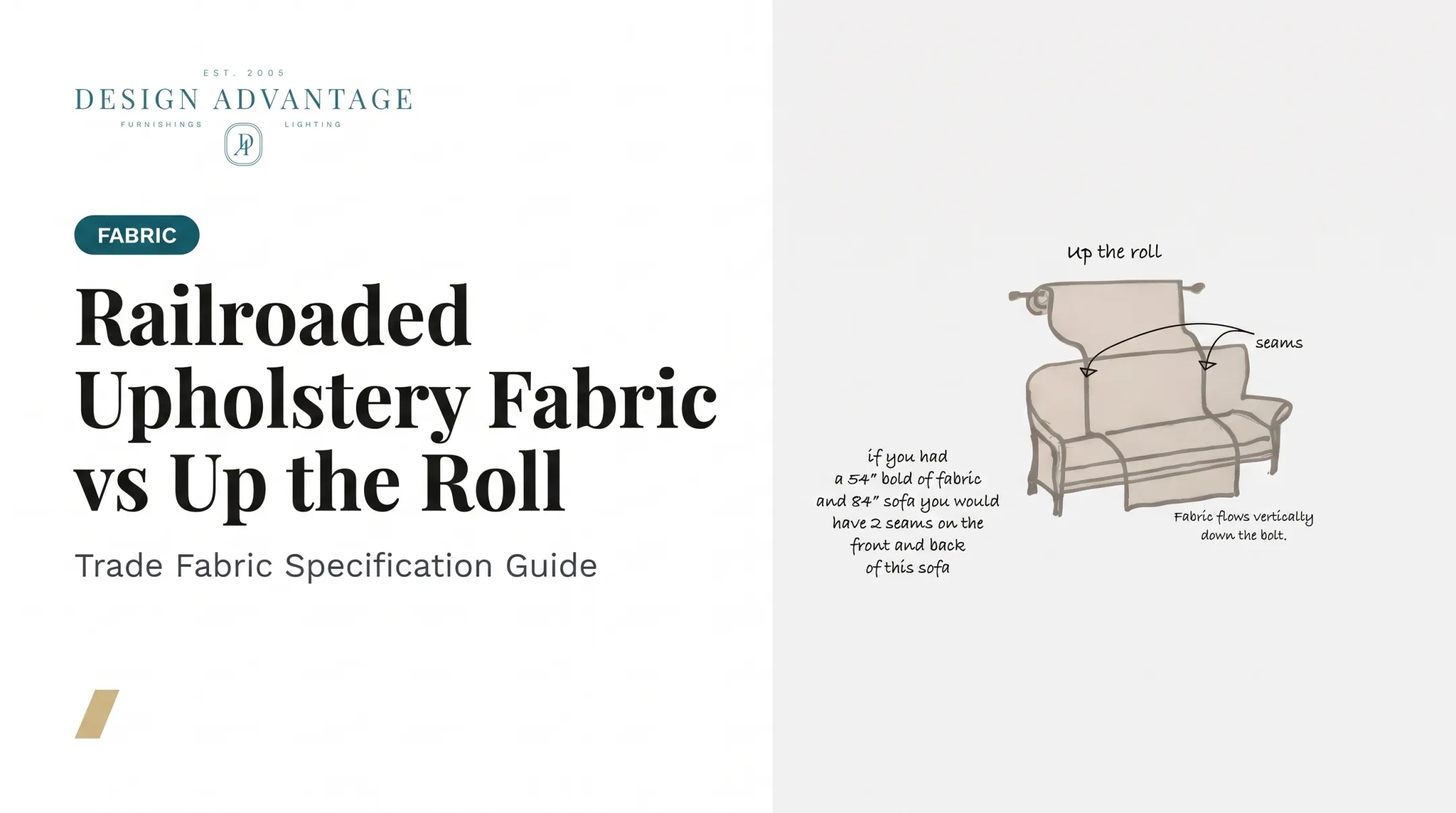
Start with fabric width. Most design fabrics are 54 inches, but widths of 50 to 56, 60, 36, 48, or 108 inches exist, so read the label. Then measure each component: seat, inside and outside back, arms, and welting.
Typical yardage for plain 54-inch fabric, per Trend Contract Furnishings:
| Chair type | Yardage |
|---|---|
| Seat pad only | 0.35-0.5 yd |
| Seat and back panel | 0.45-0.75 yd |
| Fully upholstered side chair | 1.1-2 yd |
Other suppliers give higher estimates, so confirm against your chair. Patterns add more. Bernhardt's 54-inch railroad guide adds:
- 10% for 2 to 6 inch repeats
- 20% for 7 to 14 inch repeats
- 40% for repeats over 27 inches
Bias welting adds 1.5 yards for chairs. Velvets normally run non-railroaded because of nap.
One real example: a cotton print with a 36-inch vertical and 54-inch horizontal repeat left only about 27 inches of the width usable for two small armchairs. Add an allowance for mistakes and future repairs, and confirm with your upholsterer before ordering.
Evaluate the cushion and structure
New fabric can't fix flattened foam, broken webbing, or weak springs. Foam density and firmness (IFD) are separate properties, so density alone doesn't tell you how a seat feels. Compare support, resilience, seat height, and use frequency.
Depending on condition, you may need a new cover only, a rebuilt cushion, or frame repair first.
Estimate the total cost
Main cost drivers include:
- Fabric and yardage
- Labor and chair complexity
- Pattern matching
- Cushion and frame repairs
- Trim, shipping, and rush work
Published US estimates vary:
- Angi: $100 to $550 per dining chair
- Thumbtack: average $320 to $875, with a low/high of $157 to $1,800
Angi lists frame, spring, or webbing repairs at $150 to $500. Ask for a written estimate that separates material, labor, repairs, delivery, and change orders.
DIY or professional
A removable, flat dining seat is a forgiving first project. Sculpted backs, tight upholstery, tufting, welting, big repeats, and antiques are not. Common mistakes include:
- Wrong fabric direction
- Short yardage
- Uneven tension
- Visible staples
Bring in a professional for structural damage, costly fabric, complex construction, or sentimental pieces.
Confirm logistics before ordering
- Verify fiber content, test results, and cleaning code
- Confirm dye lot, repeat, width, and direction (railroad or up the bolt)
- Check lead time, shipping, return terms, and future availability
- Attach a marked swatch to the COM form
Details vary by maker. Century suggests specifying "Dyelots Must Match," Made Goods wants full payment before upholstered production, and Chaddock cancels orders if COM hasn't arrived in 90 days. Document the approved sample in the client file so no one substitutes it.
Design Advantage helps designers coordinate fabric samples, COM details, order tracking, and receiving so approvals stay aligned through delivery.
Conclusion: Choose the Fabric for the Chair's Real Life
The best dining chair upholstery balances performance, comfort, looks, upkeep, and total cost. Before you commit:
- Compare physical samples
- Verify manufacturer specs
- Inspect the chair structure
- Confirm yardage and care requirements
Frequently Asked Questions
What is the average cost to reupholster a dining chair?
Published US estimates run roughly $100 to $875 per chair, depending on labor, fabric grade, complexity, and repairs. Cushion or frame work adds more, so request a project-specific estimate.
How much fabric is needed to cover a dining room chair?
For plain 54-inch fabric, a seat pad needs about 0.35 to 0.5 yards and a fully upholstered side chair 1.1 to 2 yards. Repeat, nap, and chair shape change that, so confirm with an upholsterer.
What is the best upholstery fabric for dining chairs?
It depends on use, cleaning, comfort, and style. Performance fabrics and vinyl suit busy homes, leather suits wipe-clean needs, and velvet or natural fibers suit lower-traffic rooms.
What is the most durable material for dining chairs?
Tightly woven performance textiles, leather, vinyl, and microfiber are strong candidates. Construction, testing, and maintenance matter as much as the category.
What fabric is like Sunbrella but cheaper?
Performance polyester, solution-dyed acrylic, and olefin are common alternatives. Compare fade resistance, cleanability, warranty, comfort, and intended use before choosing.
Where can I buy fabric for dining room chairs?
Try upholstery fabric suppliers, trade showrooms, and reputable online sources that provide swatches and full specs. Designers should verify yardage, repeat, performance, and availability first.